2026-04-03

The narrative about SEO that it’s only important for rankings is long gone. While with the increased adoption of AI online visibility has gotten more complex, it’s still not replacing SEO, just complementing it.
SEO has become the overarching term for everything you’ve ever come across on LinkedIn — GEO and AEO. So while competing to rank on Google’s search engine results page, you are also competing within AI-generated responses and zero-click environments.
And here’s the thing: If you’re not regularly auditing your SEO, your traffic might seem untouched for a little while but you may be missing out on necessary improvements.
Regular SEO audits are like car maintenance; they’re necessary and prevent problems from occurring in the first place, such as dip in rankings, lost leads, and lost revenue.
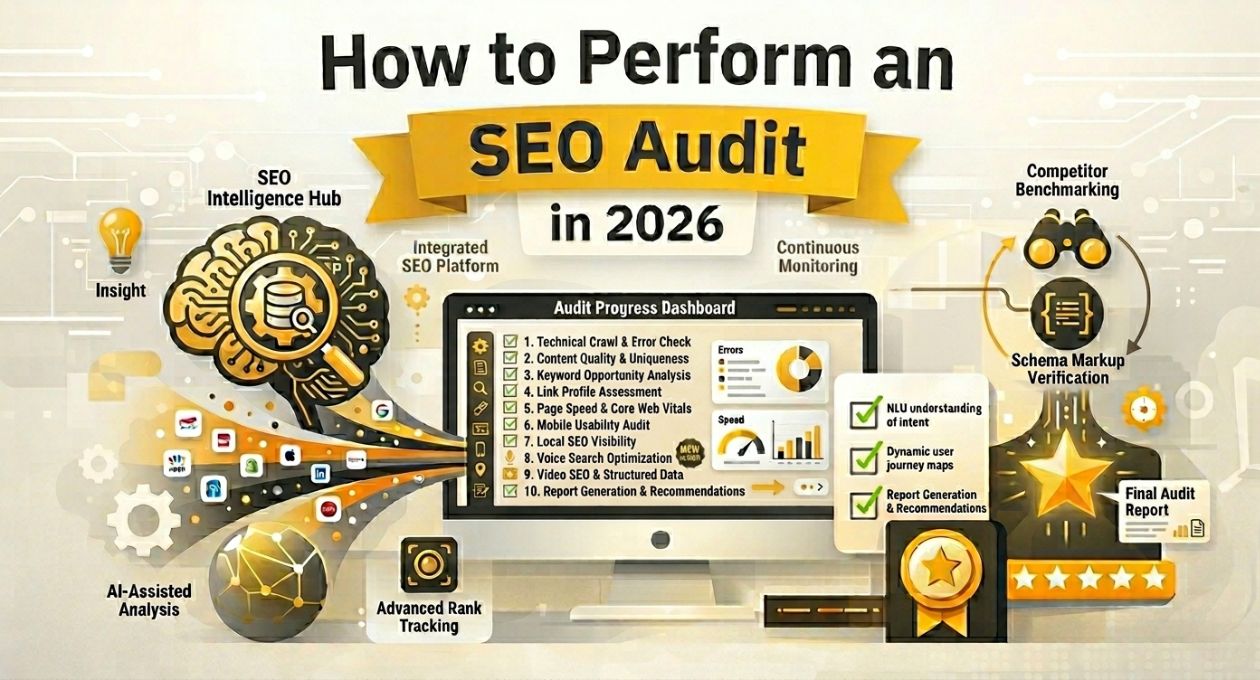
An SEO audit monitors your website’s health and ability to rank, perform, and convert within a search environment.
However, in 2026, its scope is no longer limited to SEO basics. Here’s what it should entail:
Technical SEO determines if your search engine crawlers can crawl your website, understand it, and find it trustworthy. To begin, crawl your website using Google Search Console or Screaming Frog and get an accurate view of how your website is being crawled:
You’ll receive a crawl report, which might reveal key findings, such as:
These are things you need to fix as soon as possible because, even with the best content, you won’t rank if you have these technical issues.
Next, we have indexation. While it might seem obvious to only publish content on your own site, not manually setting up indexation can lead to not getting traffic on your page. You might also notice you are inadvertently indexing pages you don’t want to, like payment pages or filters.
For successful indexation:
Core Web Vitals are a crucial ranking signal. Make sure you’re paying attention to:
Here’s what you can do to make your website faster:
Lastly, make sure your site’s technical configuration is up to the mark:
Title tags and descriptions make the first impression for your website when a user finds you in search results.
To make the most of title tags, ensure that they’re:
Structure and content hierarchy not only make your content readable, but also easier for search engines to understand.
For header tags, keep only one prominent H1 tag that describes the topics and use H2s and H3s to break up sections.
As for keyword usage, context matters more than repetition. Rather than forcing keywords into content, you’ll have to incorporate:
Then, internal linking is another powerful but often overlooked strategy that strengthens crawlability on your website. A good internal linking structure should:
Finally, optimize your URLs. Good URLs can help with usability and rankings. Try to keep them short, easy to read, and incorporate the primary keyword.
The issue of low-performing pages needs to be tackled to improve your search and LLM visibility. But how can you know if a piece of content isn’t doing justice to your SEO goals?
Low-performing pages can be described as converting but are not ranking, are on page 2 or 3 of the search engines, or have a high bounce rate.
However, it doesn’t mean you need to do away with these pages; they simply are opportunities for improvement.
Additionally, content that only provides surface-level information (also called think content) or duplicate content might be affecting the overall authority of your website.
To fix this, you might have to combine certain pages, add more content to the pages, or apply Noindex the pages
Backlinking was and remains a crucial part of your SEO audit checklist. It provides you with link juice from external websites. The better the backlinks, the better your discoverability in search engines and LLMs.
Here’s how to analyse your backlinks:
Another important aspect of enhancing your backlink profile is to study your competitors’ backlinks. You can check where your competitors are getting their backlinks, and the type of content they’re writing to earn their backlinks
Pro Tip: Keep track of any negative backlinks from spam sites that can cause your search ranking to plummet.
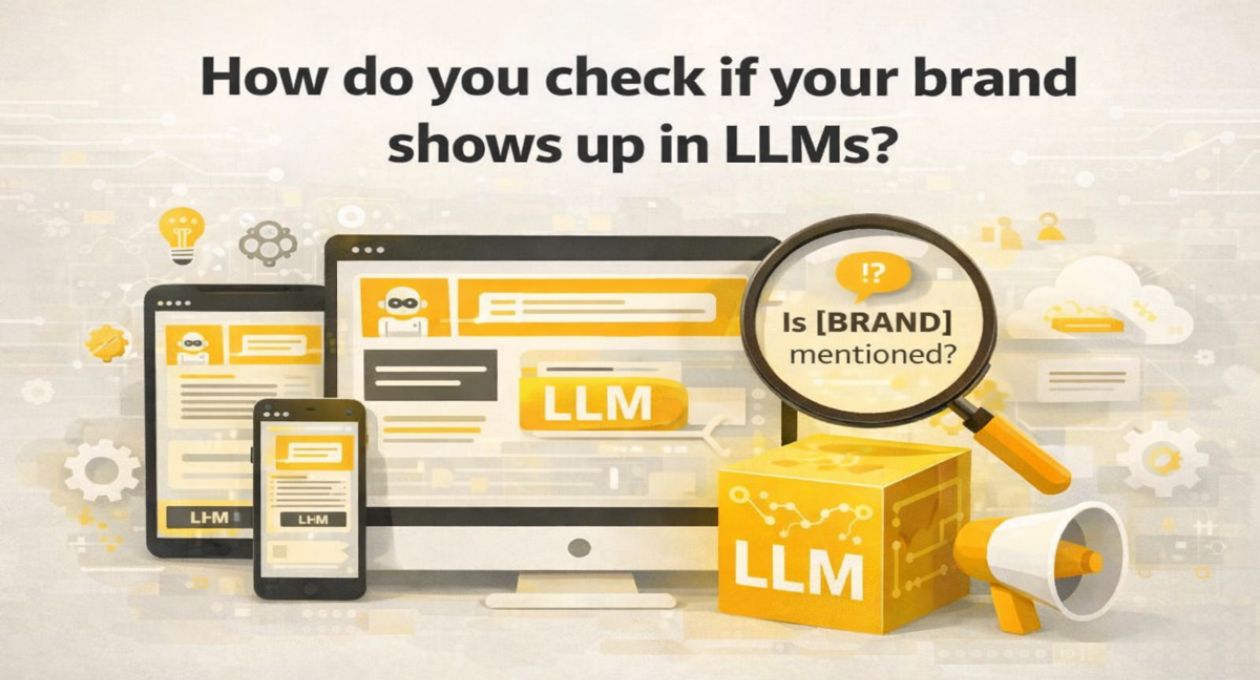
SEO in 2026 includes LLMs as a key discovery channel. To make sure you are driving visits and conversions through these sources, AI citations are integral to your discoverability.
The first thing to do is to manually test if your brand is mentioned in responses to questions pertaining to your industry.
If your brand doesn’t show up in the AI-generated response, you can take the following corrective steps:
Pro Tip: Another best practice of being picked up by LLMs is using structured data (Schema markup).
After a detailed audit, you need to prioritize your tasks and move to the execution part. As best practice, solve technical issues first and then go on to fix content or on-site problems:
To tell these issues apart, keep a close watch on metrics such as:
While most SEO audits highlight common issues, The Tech Tales takes it a step further by identifying search opportunities and creating a success roadmap. Our team focuses on priorities such as technical and content audits to find hidden issues and developing AI-driven SEO strategies to help you get discovered.
Considering the volatility of rankings, it’s not just about having a plan, it’s about having a direction. As a reputed SEO Company in Delhi, we partner with you to achieve measurable ROI, ranking growth, and visibility on search engines and AI platforms.
Book your free 30-minute SEO Audit session with us and see how we can propel your digital journey.
Digital Growth Strategist | Business Consultant | Futurepreneur With 15+ years in digital marketing, business strategy & brand building, I help businesses scale and lead in their markets through data-driven marketing and advanced technology solutions. As Co-Founder & Chief Business Strategist at The Tech Tales Interactive, I direct a team delivering high-impact strategies in SEO, Social Media, Google Ads, and Web Development for clients like IFFCO, Mahindra Cars NZ, Polymedicure, National Herald, SWOT and Stonex Jewellers across India and New Zealand. My expertise extends to AI & ML, where I utilize predictive analytics, marketing automation, and data modeling to optimize campaigns, personalize user experiences, and drive measurable growth. I’m skilled at integrating AI-powered tools for smarter decision-making and greater marketing ROI. Previously, I co-founded Digital1o1 Interactive Services, serving clients across India and the GCC, and gained firsthand experience in business resilience and digital transformation. While the company ran successfully for four years, it eventually closed, teaching me invaluable lessons in business resilience, scaling strategies, and digital transformation.